Ācāradaśā
Ten chapters of monastic wisdom — including the Kalpa Sūtra, read aloud every Paryuṣaṇa.
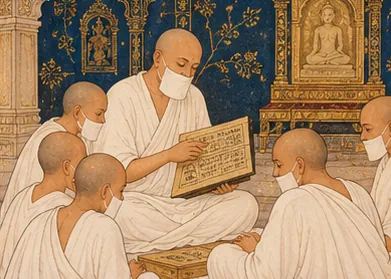
Daśā means ten; śruta-skandha means a body of scripture. Its ten chapters describe the discipline of monks and lay followers. Its eighth chapter, the Paryuṣaṇā-kalpa, is better known as the Kalpa Sūtra — the most beloved and most illustrated Jain text.
The story
Faults to Avoid
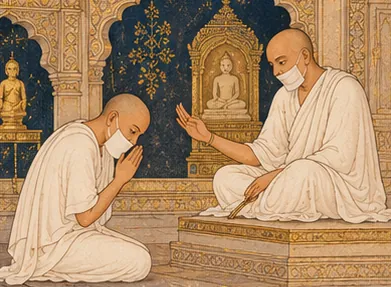
The early chapters list things that disturb the peace of a monk’s mind and community: walking carelessly, speaking harshly, disrespecting teachers, quarrelling.
One chapter describes the eight qualities of a good leader of monks: good conduct, learning, steady body, clear speech, skill in teaching, good memory, wise judgement and the ability to guide.
The Kalpa Sūtra: Fourteen Dreams
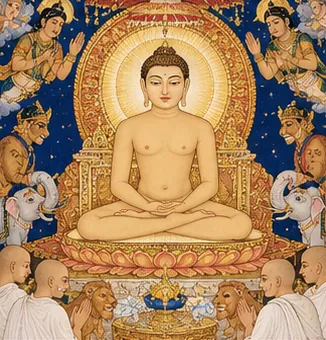
The eighth chapter tells the life of Mahāvīra. One night, Queen Triśalā sees fourteen great dreams: a white elephant, a bull, a lion, the goddess Lakṣmī, a garland, the moon, the sun, a banner, a golden vase, a lotus lake, an ocean, a celestial palace, a heap of jewels and a smokeless fire.
The dream-readers explain: she will give birth to a Tīrthaṅkara or a world emperor.
From Prince to Jina
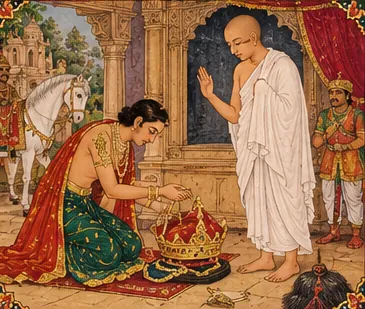
The child is named Vardhamāna — “the one who increases” — because the family’s prosperity grew from the time he was conceived. At thirty, he renounces his kingdom.
After more than twelve years of austerity, he attains omniscience. After thirty years of teaching, he attains nirvāṇa at Pāvāpurī — the night celebrated as Dīvālī.
The Kalpa Sūtra also tells the lives of Pārśva, Ariṣṭanemi and Ṛṣabha, and lists the teachers who carried the tradition.
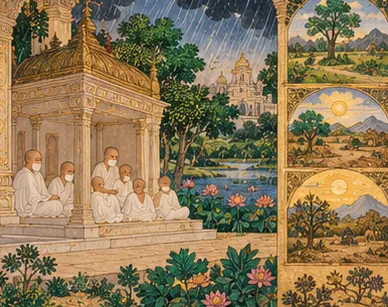
The Rainy Season Rules
The Kalpa Sūtra ends with rules for the rainy season, when monks stop wandering and stay in one place — because the earth is teeming with life after the rains.
That is why it is read during Paryuṣaṇa, the most sacred Jain festival, at the heart of the monsoon. The illustrated Kalpa Sūtra manuscripts became masterpieces of Indian painting.
What it teaches
- The book lists faults that disturb monastic peace
- It describes the qualities of a good leader
- The Kalpa Sūtra tells Mahāvīra’s life and the 14 dreams
- Rainy-season rules protect life after the monsoon
How the text is arranged
Ten chapters (daśās): causes of agitation, faults, disrespect, a leader’s qualities, mental peace, lay stages (pratimās), monastic stages, the Paryuṣaṇā-kalpa (Kalpa Sūtra), causes of delusion, and nidāna (binding desires).
Every year, the story of Mahāvīra is told again — because every year, someone hears it for the first time.
Ask yourselfWhich of the fourteen dreams would you want to carry into your own life?