Bṛhatkalpa Sūtra
Where may monks and nuns stay? What may they accept? A practical rulebook for a wandering community.
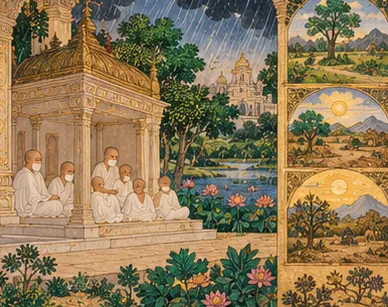
Kalpa means “what is fitting or permitted.” Bṛhat means great. This is the great book of what is fitting for Jain monks and nuns: where they stay, what they wear, what they may accept.
The story
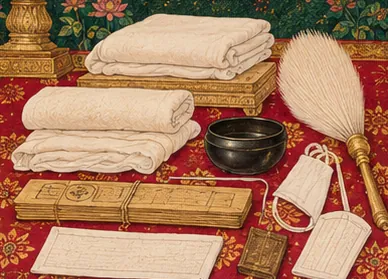
A Life with Little
A Jain monk or nun owns very little: simple cloth, a bowl, a soft broom, scriptures. The Bṛhatkalpa sets out how such requisites may be received and used.
Even a single piece of cloth carries a rule — because careless possessions breed attachment.
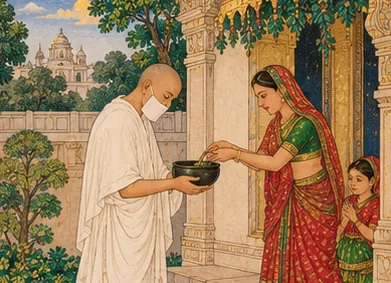
Food and Lodging
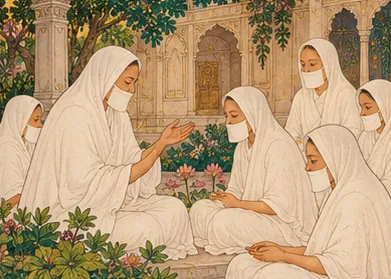
It describes what food may be accepted, and in what form. It explains where monks may stay — and where they may not. Nuns, for example, are not to stay in unprotected places, for their safety.
These rules show a community thinking practically about real dangers on the road.
Rules with Reasons
Later commentaries — the Bhāṣya and Cūrṇi — add stories, exceptions and debates to almost every rule. They show that rules were not blind commands; teachers discussed when a rule applies and when circumstances change it.
The Bṛhatkalpa is a window into how a wandering religious order actually lived.
What it teaches
- Monastic possessions are deliberately few
- Rules cover food, lodging, clothing and travel
- Nuns’ safety is specifically protected
- Commentaries explain the reasons and exceptions
How the text is arranged
Six sections (uddeśakas) of short rules. It is usually studied with its extensive commentaries, which are important sources for Indian social history.
A good rule is a fence around a garden, not a cage around a bird.
Ask yourselfWhich rules in your life protect something precious?