Anuyogadvāra Sūtra
Four doors for understanding any teaching — and seven ways of seeing the same truth.
Anuyoga means explanation; dvāra means gateway. Tradition associates this text with Āryarakṣita. It teaches how to interpret any scripture carefully, using four gateways and many viewpoints.
The story

Four Doors
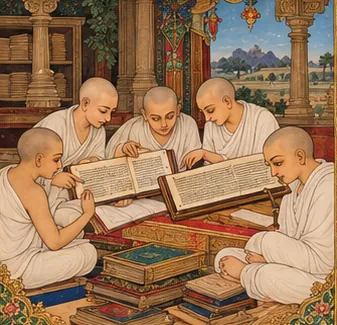
Every subject can be approached through four doors. Upakrama — the introduction: what is this about? Nikṣepa — placing the word: in which sense is it used? Anugama — following the meaning step by step. Naya — the viewpoint: from which angle is it true?
Seven Ways of Seeing
The last gateway opens onto seven nayas, or viewpoints. Each sees reality from a particular angle — general or specific, present or past, by word or by actual function.
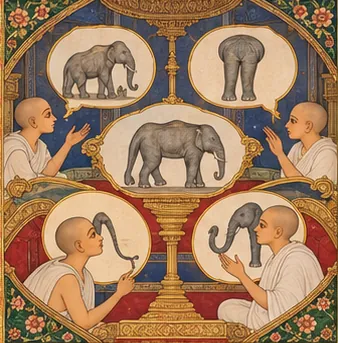
Later teachers often illustrated this with the parable of the blind men and the elephant: each truth is partial; together they reveal the whole.
The Man Going to Cut Wood
A famous example: a man takes an axe into the forest to cut wood for a wooden measuring vessel (prastha). Someone asks, “Where are you going?” “To get a prastha.”
Is he lying? There is no vessel yet! From one viewpoint, he is speaking truly — he names the goal. From another, strictly, the prastha exists only when it is finished and used.
The same sentence, true or false — depending on the viewpoint.
Measures of the Universe
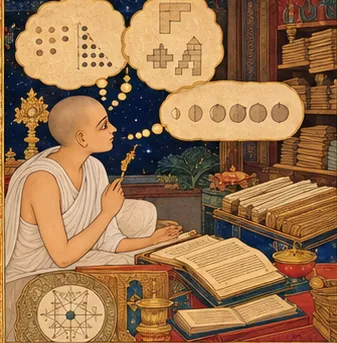
The Anuyogadvāra also explains measures of space and time, from the tiniest units to immense numbers like the palyopama.
It teaches a habit of mind that is very Jain: before you judge, ask from which angle a statement is being made.
What it teaches
- Four gateways open any teaching
- Seven viewpoints show different sides of truth
- The same statement can be true from one angle and not another
- Careful interpretation prevents misunderstanding
How the text is arranged
A methodological text on the four anuyoga-dvāras, the nayas, measures and numbers, using the word “āvaśyaka” as its main example.
Before you say “that is wrong,” ask: from which door is it being seen?
Ask yourselfThink of a recent disagreement. From which viewpoint was the other person right?