Mahāniśītha
A damaged manuscript, a careful restoration — and the story of a nun who hid one small fault.

The Mahāniśītha has an unusual history. Tradition says its manuscript was badly damaged, and the scholar Haribhadra Sūri restored it, with approval from other teachers. It stresses honest confession and contains vivid stories.
The story
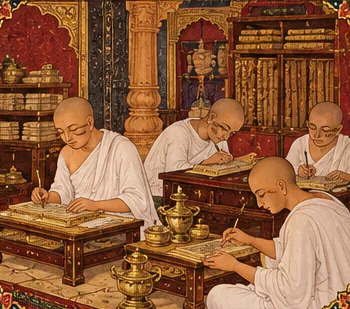
The Broken Manuscript
Imagine finding a sacred book with pages eaten through. Words missing. Lines broken. What do you do?
Tradition says Haribhadra Sūri carefully restored what could be restored, and other teachers reviewed it. The text itself tells you its history — a rare honesty.

The Nun Who Hid a Fault
Its most famous story is of the nun Lakṣmaṇā. She once had a passing improper thought. When she confessed, she was ashamed and disguised it — describing it as if it were about someone else.
She performed great austerities. But because her confession was not honest, tradition says, her soul wandered through many births before finding peace.
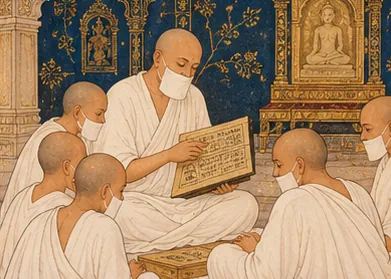
Honesty Before Austerity
The lesson is striking: a small fault, honestly confessed, is lighter than great austerity built on a hidden lie.
The Mahāniśītha also describes the respectful way of studying sacred formulas such as the Namaskāra Mantra.
What it teaches
- The text openly describes its own restoration
- Hidden faults weigh more than confessed ones
- Honesty matters more than outward austerity
- Sacred study requires respect and preparation
How the text is arranged
Eight chapters (adhyayanas), with appendices, mixing rules, teachings on confession and illustrative stories. Its textual history is complex.
One honest sentence weighs more than a thousand fasts.
Ask yourselfIs there something you have “confessed” in a way that still hides it?