Niśītha Sūtra
A detailed guide to faults and atonements — taught only to mature monks, “at midnight”.
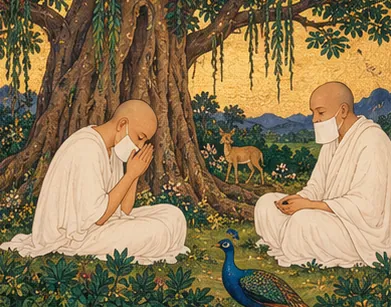
Niśītha can mean “midnight” — something taught privately. Traditionally, this text was studied only by experienced monks, because it discusses faults in detail and how each one should be atoned for.
The story
A Doctor’s Handbook
Think of the Niśītha as a doctor’s handbook. A doctor must know diseases in detail in order to heal them. Similarly, a senior monk must know exactly which faults call for which remedy.
That is why it is not for beginners — not because it is secret for its own sake, but because knowledge of faults must be handled with maturity.
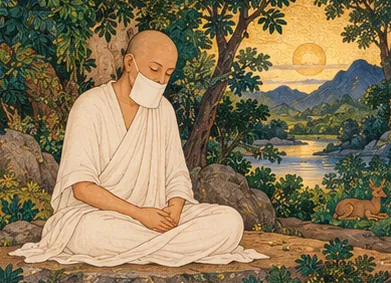
Measured Atonements
For each fault, the text prescribes a measured atonement (prāyaścitta), often in terms of periods of fasting or other practices, graded light or heavy.
The aim is not punishment, but purification — restoring the monk to clean conduct.
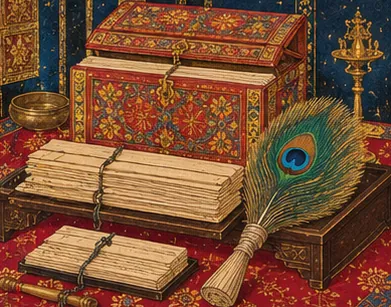
A Living Tradition
Its commentaries, especially the Niśītha Cūrṇi, are rich historical sources, full of discussions of exceptions and real situations.
The Niśītha reminds us that a spiritual community is made of human beings — who stumble, confess and rise again.
What it teaches
- Knowledge of faults must be handled with maturity
- Atonement is graded to the fault
- The aim is purification, not punishment
- Commentaries preserve rich history
How the text is arranged
Twenty sections (uddeśakas) listing faults and their atonements. Traditionally studied only by experienced mendicants.
A medicine is measured to the illness. So is atonement.
Ask yourselfWhen you make a mistake, do you seek punishment — or healing?