Puṣpikā
Gods and goddesses visit Mahāvīra — including a goddess surrounded by children, and her surprising past.
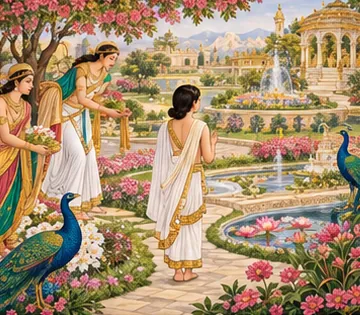
Puṣpa means flower. This text’s ten chapters are like ten flowers: ten celestial beings who came to honour Mahāvīra, and the past lives that led them there.
The story
Visitors from the Sky
One by one, celestial beings came to Mahāvīra: the gods of the Moon and Sun, Śukra, and others. Each time Gautama asked: what did this being do to gain such a birth?
The Moon and Sun gods, Mahāvīra explained, had once been followers of Pārśvanātha who practised, but with lapses — enough for heaven, not for liberation.
The Goddess of Many Children
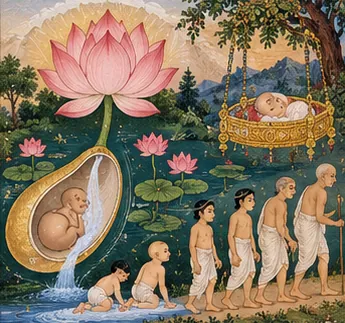
The most touching story is of Bahuputrikā, “she of many children.” She came surrounded by children.
In a past life, she was Subhadrā, a merchant’s wife in Vārāṇasī who longed for a child and had none. She became a nun, but could not let go of her longing. She would cuddle and dress the children of laypeople, against the rules of her order.
The Lesson of Longing
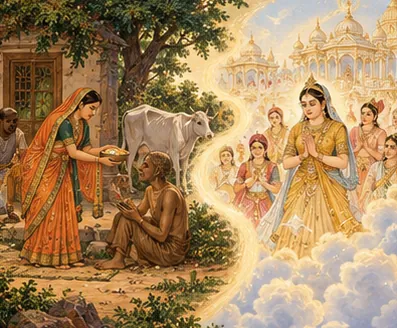
Her practice brought her to heaven. But her longing shaped her new birth.
The story continues into her future: born again as a woman with many children, she will find them exhausting and finally, freely, choose renunciation.
The text doesn’t mock her love. It shows how even sweet attachments can quietly bind us.
What it teaches
- Even good practice can be limited by lapses
- Attachments shape future births
- Sweet desires bind as surely as bitter ones
- Gautama’s questions reveal hidden past lives
How the text is arranged
Ten chapters on ten celestial beings: Candra, Sūrya, Śukra, Bahuputrikā, Pūrṇabhadra, Māṇibhadra, Datta, Śiva, Bala and Anādhṛta.
A golden chain is still a chain.
Ask yourselfIs there a loving attachment in your life that also holds you back?