Kalpāvataṃsikā
The sons of the fallen princes chose a different road — restraint instead of war.
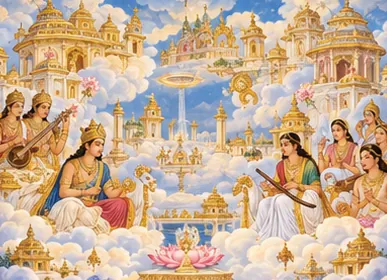
Kalpa-avataṃsaka means “ornament of the heavens.” This text continues the story of the Nirayāvalikā, following the next generation — the sons of the princes who died in war.
The story
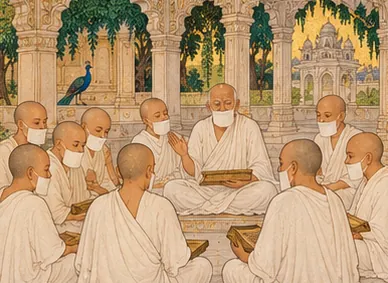
The Sons of the Fallen
Padma, son of the fallen prince Kāla, and nine of his cousins grew up in the shadow of that war. They had heard how their fathers died.
When Mahāvīra came, they listened — and chose a completely different path. They took initiation as monks.
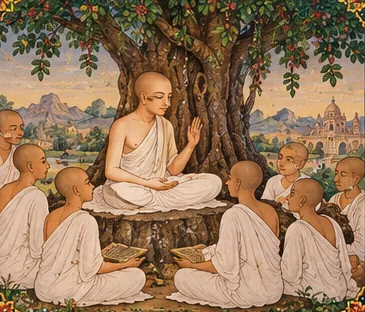
A Different Inheritance
They studied, fasted and practised restraint. At the end of their lives, they were reborn in the heavens — the “ornaments” of the celestial realms.
The tradition holds that they will be reborn as humans in Mahāvideha and attain liberation.
Two Generations, Two Destinies
Read the Nirayāvalikā and the Kalpāvataṃsikā side by side. Same family. Same royal blood. Fathers who chose violence went down; sons who chose restraint rose up.
Jainism teaches that you are not trapped by your family’s past. Each soul writes its own story.
What it teaches
- A new generation can choose a different path
- Restraint leads upward, violence downward
- Heavenly rebirth is a stage toward liberation
- No one is bound by their family’s karma
How the text is arranged
Ten chapters about ten grandsons of King Śreṇika — Padma, Mahāpadma, Bhadra, Subhadra, Padmabhadra, Padmasena, Padmagulma, Nalinīgulma, Ānanda and Nandana.
You inherit a name, not a destiny.
Ask yourselfWhat pattern in your family history would you choose not to repeat?