Antakṛddaśāṅga
Souls who ended rebirth in this very life — a prince on burning coals and a killer transformed.

Anta-kṛt means “one who has made an end” — an end to karma, rebirth and suffering. These people attained liberation in the very same life.
The eighth Aṅga gathers ninety such lives. Some are royal, some ordinary, some shocking. All end in perfect freedom.
The story
The Youngest Brother
Gajasukumāla was the beloved younger brother of Kṛṣṇa Vāsudeva of Dvārakā. A beautiful bride had been chosen for him. But after hearing the Tīrthaṅkara Ariṣṭanemi, he renounced everything and became a monk the same day.
That evening, he went to a cremation ground to stand in meditation.
Somila, the brahmin whose daughter he was to marry, passed by and saw him. Furious, he made a ring of wet clay on the young monk’s head and filled it with burning embers.
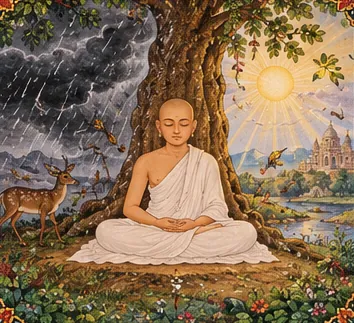
Fire on His Head
Gajasukumāla did not cry out. He did not hate. He reflected: this man is helping me burn away my karma.
With that perfect equanimity, the story says, he attained omniscience and liberation that very night.
The story is not about pain. It is about a mind so free that even fire could not light a flame of anger in it.
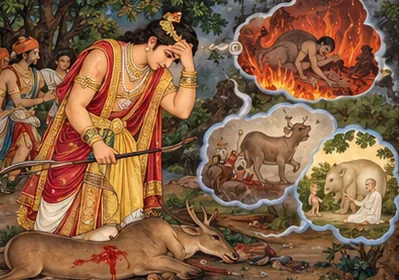
Arjunamālī the Gardener
In Rājagṛha lived Arjuna, a gardener. After a terrible wrong was done to him and his wife, a fierce spirit possessed him. Every day he roamed outside the city with an iron club, killing people. The city gates were shut in fear.
When Mahāvīra arrived nearby, a devoted merchant named Sudarśana decided to go and see him anyway. On the road, Arjuna rushed at him. Sudarśana stood still in meditation.
The spirit could not touch him and fled. Arjuna collapsed — himself again.
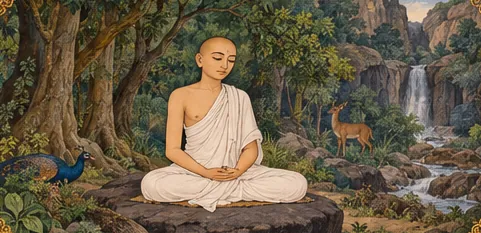
The Killer Who Became a Saint
Arjuna went with Sudarśana to Mahāvīra and became a monk. When he walked into the city for alms, people who had lost family members struck him, cursed him and threw stones.
Arjuna did not answer. He accepted it all as the fruit of his own deeds. For six months he bore it with patience — and, the text says, attained liberation.
No soul, Jainism teaches, is beyond transformation.
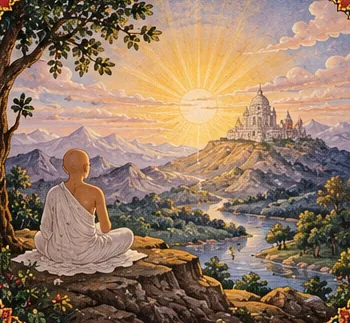
The Little Monk
The book also has lighter moments. Atimukta was a little boy who became a monk. One rainy day, he saw a puddle, made his alms bowl into a boat, and floated it, laughing.
The older monks were shocked. But Mahāvīra told them: do not look down on him. This child will reach liberation in this very life.
Holiness, the story suggests, is not measured by age or seriousness.
What it teaches
- Liberation is possible in this very life
- Equanimity can transform even violent suffering
- No one is beyond change and redemption
- Patience under insult burns away karma
- Do not judge spiritual worth by appearances
How the text is arranged
Eight sections (vargas) with ninety chapters. The early sections include figures from Kṛṣṇa’s Dvārakā in the time of Ariṣṭanemi; later ones belong to Mahāvīra’s time, including Arjunamālī, Atimukta and queens of King Śreṇika.
Even fire cannot burn a mind that has let go of anger.
Ask yourselfIs there someone you have written off as beyond change?