Āturapratyākhyāna
How to meet illness and the end of life with clarity, forgiveness and peace.
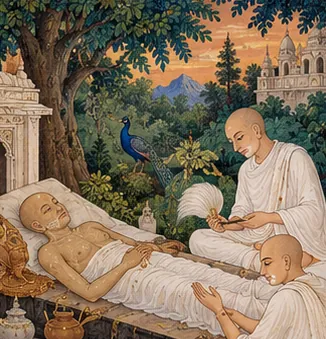
Ātura means one who is ill or in distress; pratyākhyāna means renunciation or resolve. This text describes the spiritual attitude of facing serious illness and death with awareness. It is religious reflection, not medical guidance.
The story
Three Ways to Die
The text speaks of three kinds of death: the “foolish” death of one without understanding; the “foolish-wise” death of a lay follower with partial vows; and the “wise” death of one fully awake.
The question is not whether we will die, but how awake we will be.
Forgiving Everyone
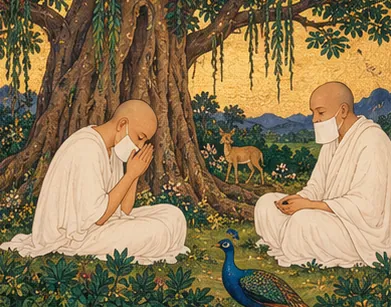
The sick person asks forgiveness from all beings and forgives all. They let go of grudges, of possessions, of attachments to family and body.
The mind becomes light, like a traveller who has set down a heavy load.
Not Alone
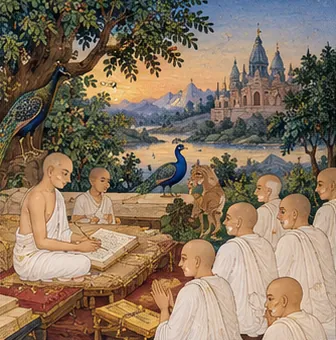
The companions of the sick person support them with gentle reminders of the teaching.
The Āturapratyākhyāna shows a community that does not turn away from death, but sits beside it with compassion.
What it teaches
- How we face death matters spiritually
- Forgiveness lightens the mind
- Companions support the dying with care
- This is reflection, not medical instruction
How the text is arranged
A short Prakīrṇaka of about seventy verses, on the kinds of death and the inner preparation of the sick.
Set down your burdens before the journey, and the road becomes light.
Ask yourselfWhat grudge would you not want to carry to the end?