Bhaktaparijñā
A reflection on the deepest form of letting go — and the inner attitude that gives it meaning.
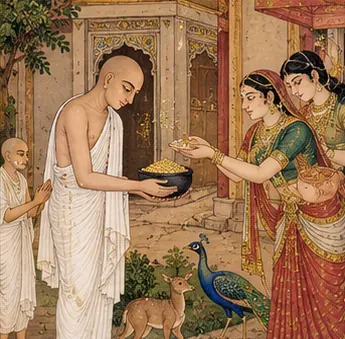
Bhakta means food; parijñā means full understanding and renunciation. This text belongs to the Jain tradition of reflection on the last stage of life. It describes a religious ideal, not a practical or medical instruction.
The story
The Weight of a Meal
For Jains, eating is never fully innocent — it always involves some harm. Monks therefore eat little and mindfully.
The Bhaktaparijñā reflects on renunciation of food as a spiritual symbol: letting go of the deepest attachment of the body.
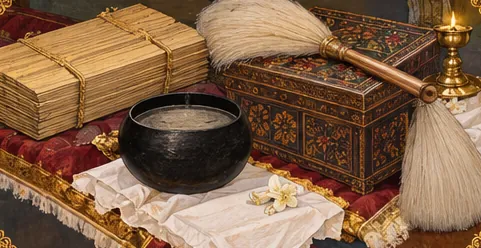
The Inner Attitude
The text insists that outward renunciation without inner calm is empty. Anger, pride, fear or desire for fame can spoil it.
What matters is equanimity, forgiveness and focus on the soul.
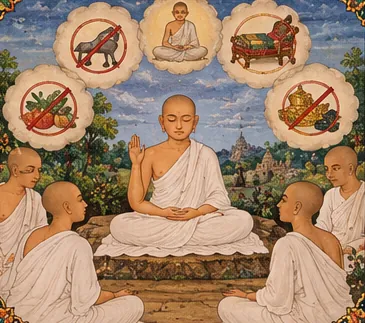
Stories of Steadiness
It includes stories of people who remained steady in their vows and reflections on the five great vows.
It asks the reader to see renunciation not as a loss, but as a freedom.
What it teaches
- Renunciation without inner calm is empty
- Equanimity and forgiveness are the heart of letting go
- This text describes a historic religious ideal, not instruction
How the text is arranged
A Prakīrṇaka of about 170 verses on the inner discipline of renunciation at life’s end. Study through a recognised edition and teacher.
It is not what the hand lets go of, but what the heart lets go of.
Ask yourselfWhat is hardest for you to let go of — and why?