Āvaśyaka Sūtra
The six daily duties at the heart of Jain practice — including the beloved “Micchāmi Dukkaḍaṃ”.
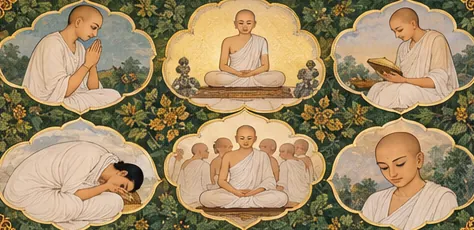
Āvaśyaka means “that which must be done” — the essential. This text describes the six daily duties of monks and nuns, also practised in various forms by lay Jains.
The story
Six Steps of the Day
The six essentials are: (1) Sāmāyika — equanimity; (2) Caturviṃśati-stava — praising the twenty-four Tīrthaṅkaras; (3) Vandana — bowing to teachers; (4) Pratikramaṇa — turning back from faults; (5) Kāyotsarga — standing in meditation, letting go of the body; (6) Pratyākhyāna — renouncing something for a set time.
Turning Back
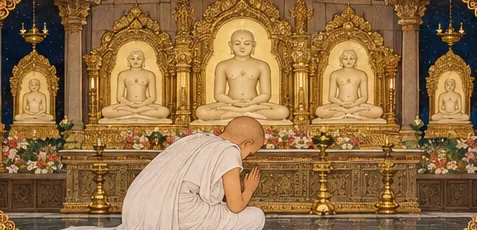
Pratikramaṇa means “walking back.” Every evening, a monk reviews the day: Did I harm any being? Did I speak harshly? Did I take what was not given?
And then: Micchāmi dukkaḍaṃ — “may my wrongdoing be fruitless.” On Saṃvatsarī, at the end of Paryuṣaṇa, Jains everywhere say these words to one another, asking and offering forgiveness.
Letting Go
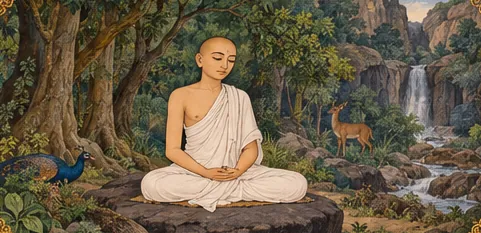
In kāyotsarga, the practitioner stands or sits completely still, letting go of attachment to the body.
The Āvaśyaka Niryukti and its commentaries surround these practices with hundreds of stories, making this one of the richest story-traditions in Jain literature.
What it teaches
- Six daily duties form the core of practice
- Pratikramaṇa means reviewing and turning back from faults
- Micchāmi Dukkaḍaṃ asks and offers forgiveness
- Meditation means letting go of the body
How the text is arranged
Six sections, one for each essential practice. Its commentaries are among the largest story-collections in Jain literature.
Each evening, walk back over your day — and leave your faults behind you.
Ask yourselfWhom do you need to say Micchāmi Dukkaḍaṃ to?