Piṇḍaniryukti
Forty-two faults in giving and receiving food — a careful science of the begging bowl.

Piṇḍa means alms or food; niryukti means explanation in verse. This text, traditionally linked to Bhadrabāhu, explains the chapter on alms in the Daśavaikālika in great detail. Some lists place the Oghaniryukti here instead or alongside it.
The story
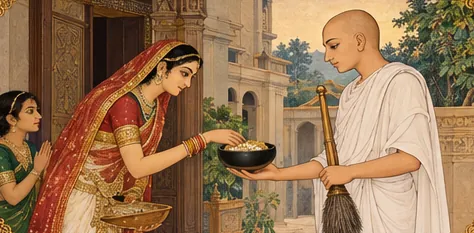
Food Not Cooked for Me
A Jain monk does not cook and must not cause anyone to cook especially for him, since cooking involves harm to fire, water and many tiny beings.
So the most serious fault is food prepared specially for the monk. The text explains how a monk can recognise it — and decline it.
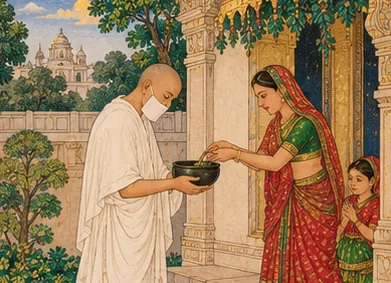
Forty-Two Faults
The text lists forty-two faults. Sixteen arise from the giver (how food was prepared). Sixteen arise from the receiver (how it was obtained — for example, by flattering the donor or carrying messages for them). Ten arise from both.
Each fault is a way in which harm or attachment can sneak into a simple meal.
The Spiritual Science of a Meal
For Jains, food is never “just food.” The Piṇḍaniryukti turns eating into mindfulness: where did this come from? Who was harmed? Was it given freely?
This care shapes Jain food culture even for lay people today.
What it teaches
- Monks must not cause food to be cooked for them
- Forty-two faults guard against harm in alms
- Food ethics is part of spiritual practice
How the text is arranged
A verse explanation (niryukti) of the alms chapter of the Daśavaikālika, organised around the faults of giving, receiving and eating.
A meal received with care is a meal that harms no one.
Ask yourselfDo you know where your last meal came from — and what it cost others?