Saṃstāraka
A song of praise for the simple bed of grass — and the great souls who stayed calm upon it.
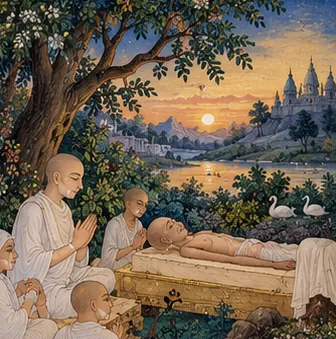
Saṃstāraka means a bed or mat of grass, the simple bedding used by a monk in their final days. This text praises the spiritual meaning of that last stage. It is religious literature, not practical instruction.
The story
Simpler Than a Throne
The text praises the saṃstāraka as more precious than a royal throne — because on it, a soul can let go of everything and remain at peace.
It is a poem of praise for simplicity.
Calm in the Face of Pain
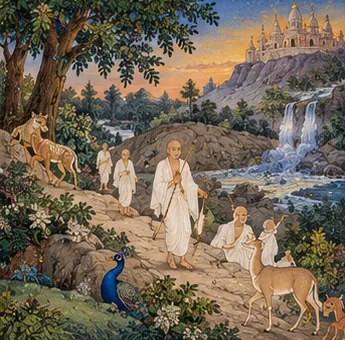
It recalls great souls of tradition who stayed calm through intense suffering at the end — such as the monk Sukośala, and the young prince Gajasukumāla.
Their stories inspire not to seek suffering, but to meet whatever comes with an unshaken mind.
The Last Sunrise
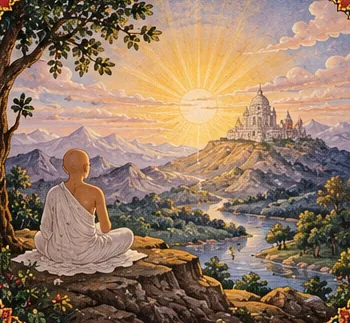
The Saṃstāraka sees death not as a defeat but as a final teaching moment.
Its closing message: the one who is calm at the end has truly learned.
What it teaches
- Simplicity can be more precious than royal comfort
- Equanimity in suffering is the highest courage
- Death can be met with awareness
How the text is arranged
A Prakīrṇaka of about 120 verses, praising the final mat of grass and recalling exemplary figures.
A bed of grass, a calm mind: everything else is decoration.
Ask yourselfWhat does “a peaceful ending” mean to you?