Vyavahāra Sūtra
How a monastic community confesses, decides and leads — fairly and without hiding faults.
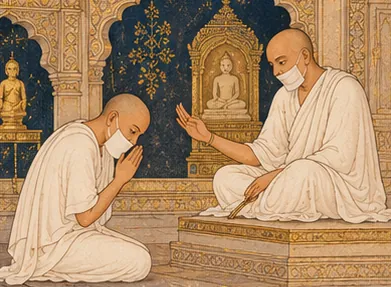
Vyavahāra means procedure, conduct or judgement. This Cheda-sūtra explains how a monastic community deals with faults, who may lead, and on what basis decisions are made.
The story
Confession Without Fear
A monk who errs should confess (ālocanā) honestly to a qualified senior. The text explains what to do if such a person is not available — seeking out another, and then another.
The principle is clear: a fault hidden grows; a fault confessed can be healed.
Five Grounds of Judgement
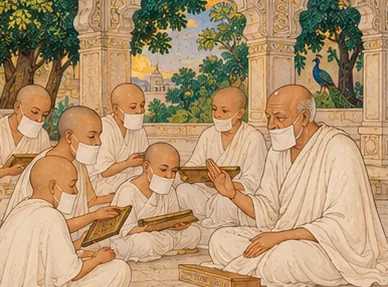
The Vyavahāra names five bases for deciding: direct spiritual knowledge (āgama), scripture (śruta), a teacher’s instruction (ājñā), remembered tradition (dhāraṇā) and established practice (jīta).
When the highest is not available, the next is used. It is a careful ladder of authority.
Who May Lead?
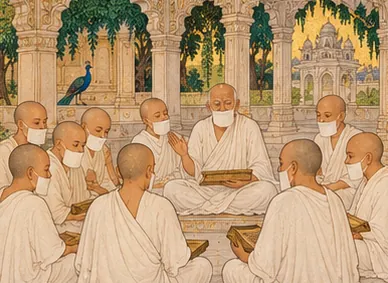
The text also discusses the roles of the community — ācārya (head), upādhyāya (teacher) and others — and the qualities and experience needed for each.
Leadership, here, is not a prize. It is a responsibility given to those who have proven their learning and conduct.
What it teaches
- Honest confession heals faults
- Decisions rest on five ordered bases
- Leadership requires learning and conduct
- A community needs fair procedures
How the text is arranged
Ten sections (uddeśakas) on confession, atonement, leadership roles and procedures. It pairs closely with the Bṛhatkalpa.
A wound shown to a healer can close. A wound hidden only deepens.
Ask yourselfIs there a mistake you need to admit to someone you trust?