Gaṇividyā
When should a teacher begin a journey, initiate a student, or start a study? Ancient wisdom about auspicious time.
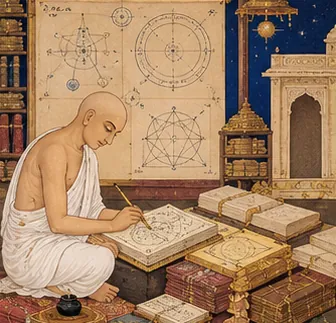
Gaṇi means a leader of monks; vidyā means knowledge. This short text records traditional knowledge about choosing auspicious times for important religious actions. It reflects historical practice, not modern science.
The story
Nine Kinds of Strength
The text describes nine “strengths” to consider when choosing a time: day, lunar date, constellation, karaṇa, planetary day, muhūrta (period of the day), omens, rising sign and signs.
These were used for initiations, study, travel and other occasions.

Time as a Partner
Behind this lies a simple idea: actions are shaped by their moment. A seed sown in the right season grows best.
The Gaṇividyā gives teachers a traditional calendar of good moments.

Reading It Today
This is historical knowledge from an ancient tradition. Its lasting lesson is patience and thoughtfulness: do not rush into important things; choose your moment with care.
What it teaches
- Traditional time-reckoning guided religious actions
- Nine factors were considered
- The deeper lesson is thoughtful timing
How the text is arranged
A short Prakīrṇaka of under a hundred verses on auspicious timing.
The right action at the right moment is a seed in good soil.
Ask yourselfWhat important step are you rushing — or delaying?