Mahāpratyākhyāna
“I am alone; no one is mine, and I am no one’s.” A powerful meditation on letting go.
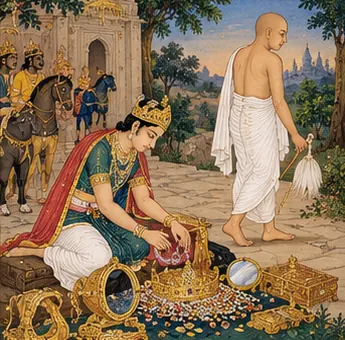
Mahā means great; pratyākhyāna means renunciation. This text is a series of resolutions to give up faults, attachments and wrong views, and to forgive all beings.
The story
Nothing Is Mine
The text returns again and again to a striking reflection: I am alone. No one is mine, and I belong to no one.
This is not loneliness. It is clarity. Every soul travels its own path, carrying only its own karma and its own virtues.
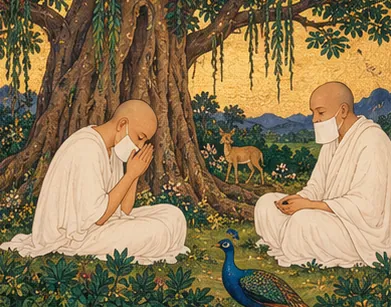
Giving Up Faults
The practitioner renounces faults one by one: anger, pride, deceit, greed, attachment, hatred.
Each renunciation is like opening a window in a stuffy room.
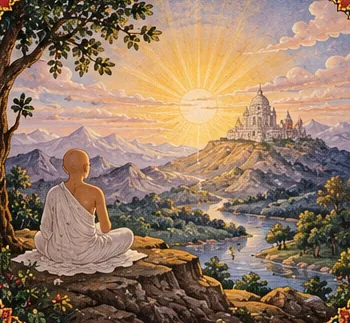
The Freedom of Emptiness
When nothing is clung to, nothing can be lost. The Mahāpratyākhyāna leads the mind to that open, peaceful space.
What it teaches
- The soul travels alone, with only its own karma
- Renouncing faults frees the mind
- Non-clinging brings peace
How the text is arranged
A Prakīrṇaka of about 140 verses of resolution, repentance and forgiveness.
What you do not cling to, you can never lose.
Ask yourselfWhat would you still want to keep if you could keep only your qualities?