Praśnavyākaraṇa
Five doors through which karma floods the soul — and five gates that close them.
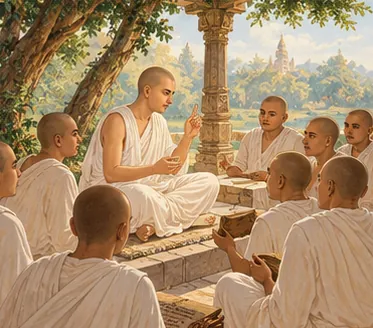
Praśna means question; vyākaraṇa means explanation. Early descriptions in the Samavāyāṅga and Nandī suggest this Aṅga once contained questions, answers and special knowledge.
The text we have today is different. It teaches the five doors of āsrava (inflow of karma) and the five doors of saṃvara (stopping it). Scholars see this as a clear example of how a text can change over time.
The story
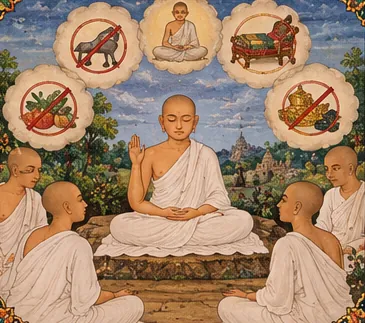
A Boat with Five Holes
Jain teachers often compare the soul to a boat on the ocean of rebirth. Karma is the water. If the boat has holes, water rushes in, and the boat sinks.
The Praśnavyākaraṇa names five great holes: violence, falsehood, taking what is not given, unchastity, and possessiveness.
It describes each one vividly — what it looks like, what it does to the person who commits it, and the suffering it leads to.
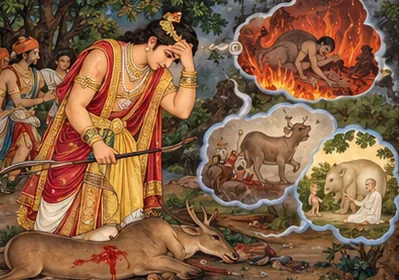
The Five Doors of Inflow
Violence comes first, and the text paints it in dark colours: the harm done to creatures of earth, water, air and forest, and the cruelty that grows in the harmer’s own heart.
Then falsehood, which poisons trust. Theft, which feeds fear. Unchastity, which binds the mind to restless desire. Possessiveness, which makes a person a guard of things rather than their owner.
Each door, left open, lets in a flood.
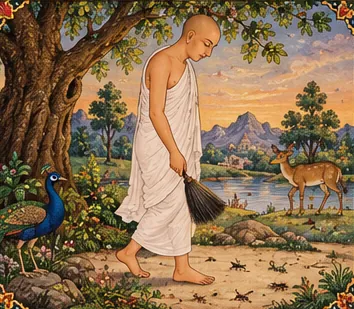
The Five Gates That Close
Then the book turns. For each hole, there is a patch.
Non-violence closes the first door; truthfulness, the second; not taking what is not given, the third; chastity, the fourth; non-possession, the fifth.
These are the five great vows. Here they are not cold rules, but gates — strong, beautiful gates that protect the soul’s inner city.
A Book That Changed
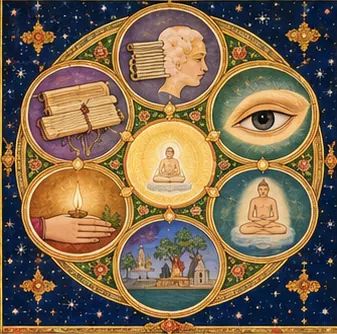
Why does the surviving text not match its old description? Tradition offers explanations: perhaps powerful teachings about spells and special knowledge were withdrawn to prevent misuse.
Whatever the reason, the Praśnavyākaraṇa invites honesty about history. Scriptures are living things, carried through human hands.
And what it carries now — a clear map of what binds us and what frees us — remains deeply practical.
What it teaches
- Karma flows in through five main doors
- Violence, falsehood, theft, unchastity and possessiveness bind the soul
- The five great vows close these doors
- The surviving text differs from its early descriptions
How the text is arranged
Two parts of five sections each: the five āsrava-dvāras (doors of inflow) and the five saṃvara-dvāras (doors of restraint).
Patch the holes, and the boat will carry you home.
Ask yourselfWhich of the five doors is most open in your life right now?