Vipākaśruta
Two books of consequences: lives of sorrow and lives of joy — and the choices that planted them.
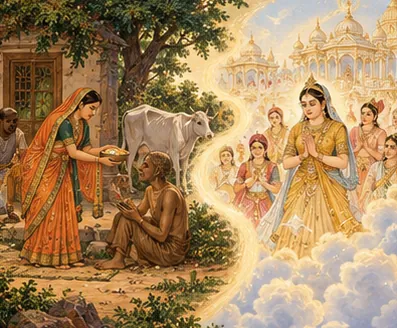
Vipāka means the ripening of a fruit. Śruta means scripture. This is the scripture of ripening — of how actions bear fruit.
It has two halves. The Duḥkha-vipāka tells ten stories of painful results. The Sukha-vipāka tells ten stories of happy results.
The story
Two Gardens
Imagine two gardens. In one, someone planted thorns. In the other, someone planted fruit trees. Years later, the gardeners return.
The Vipākaśruta works like that. Gautama sees a person suffering or flourishing, and asks Mahāvīra, “Bhante, what did this soul do in a past life?”
Mahāvīra traces the thread back to the seed.
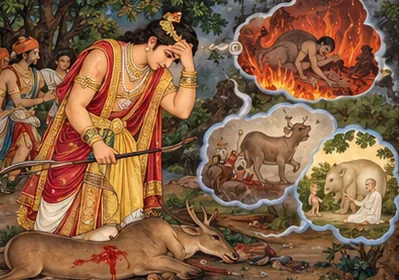
Mṛgāputra’s Hidden Room
In the city of Mṛgagrāma, Gautama learned of a boy named Mṛgāputra, kept hidden by his mother, the queen, in a secret chamber. He had been born in great suffering.
Gautama asked Mahāvīra why. In a past life, came the answer, he had been a ruthless official who crushed the people under him, taking their wealth with cruelty and without mercy.
The story is hard to read. It is meant to be. It makes the cost of cruelty impossible to ignore.
Prince Subāhu
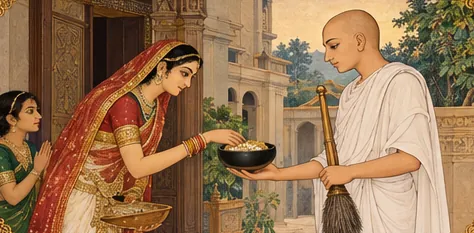
In the second book, Gautama meets a radiant young prince, Subāhu, loved by everyone in Hastiśīrṣa.
Why is he so blessed? In a past life, Mahāvīra explains, he was a householder named Sumukha. One day a fasting monk came to his door, and Sumukha offered him food with a pure and joyful heart.
That one sincere act of giving ripened into a life of beauty and grace. Subāhu later took vows himself.
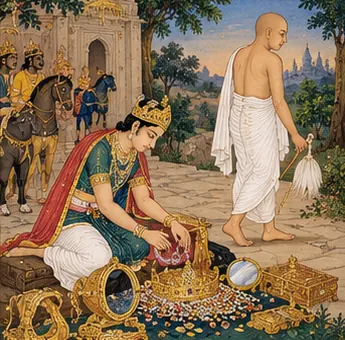
The Lesson of Ripening
The Vipākaśruta does not say suffering people deserve contempt. It says every soul is the author of its own path — and can write a new chapter.
It teaches responsibility, not blame. And it teaches hope: if cruelty ripens into pain, generosity and restraint ripen into joy.
Each moment is a seed. Plant carefully.
What it teaches
- Every action is a seed that will ripen
- Cruelty leads to suffering; generosity to happiness
- The results may come in another life
- Karma teaches responsibility, not contempt for others
How the text is arranged
Two books of ten chapters each: Duḥkha-vipāka (painful fruits), including Mṛgāputra, and Sukha-vipāka (happy fruits), beginning with Subāhu.
You cannot choose the harvest, but you can choose the seed.
Ask yourselfWhat seed did you plant today?